Ingredient Match vs AI Match: How to Read a Beauty Dupe
Ingredient overlap is useful, but it is not the same as a full dupe verdict. Here is how Skino separates facts from judgment.
Written by Skino Editorial
Last updated: 8 min read
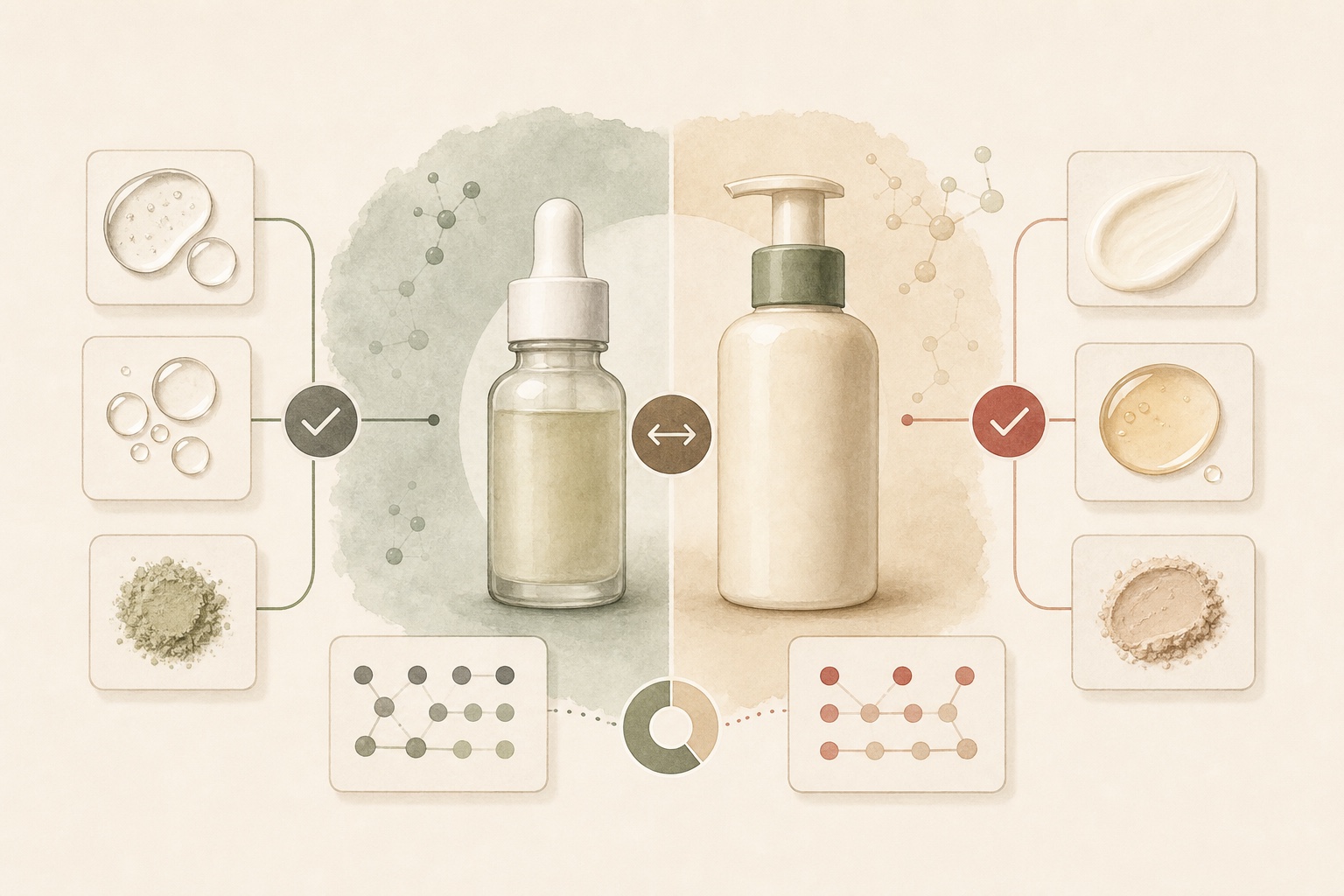
Ingredient match is a signal
Ingredient overlap can show whether two products belong in the same conversation. It can also reveal when a supposed dupe is only visually similar.
The limit is that ingredient lists do not tell the whole story. Percentages, sourcing, delivery systems, texture, and use context can change how a product behaves.
AI Match interprets the tradeoffs
Skino uses AI explanation after structured facts have been collected. The AI layer should summarize the tradeoffs, not invent new product facts or replace deterministic checks.
That keeps the judgment readable while preserving the evidence that a shopper can inspect.
Known differences should not disappear
- Different active strength.
- Fragrance or essential oil status.
- Texture, dry-down, or finish mismatch.
- Shade, undertone, or coverage gap.
- Price difference that looks large but changes after size is considered.
A practical reading order
Read the reference product first, then the dupe candidate, then the shared signals, then the differences. If the differences affect your skin or routine, the match score should not be treated as permission to buy.
Take this reading framework into specific product pages with formula, price, and known differences kept visible.
Browse Skino dupes